
INTERVIEW – ITALIAN ARCHITECTURE STARS INTERNATIONAL MARKETS AT MIPIM IN CANNES
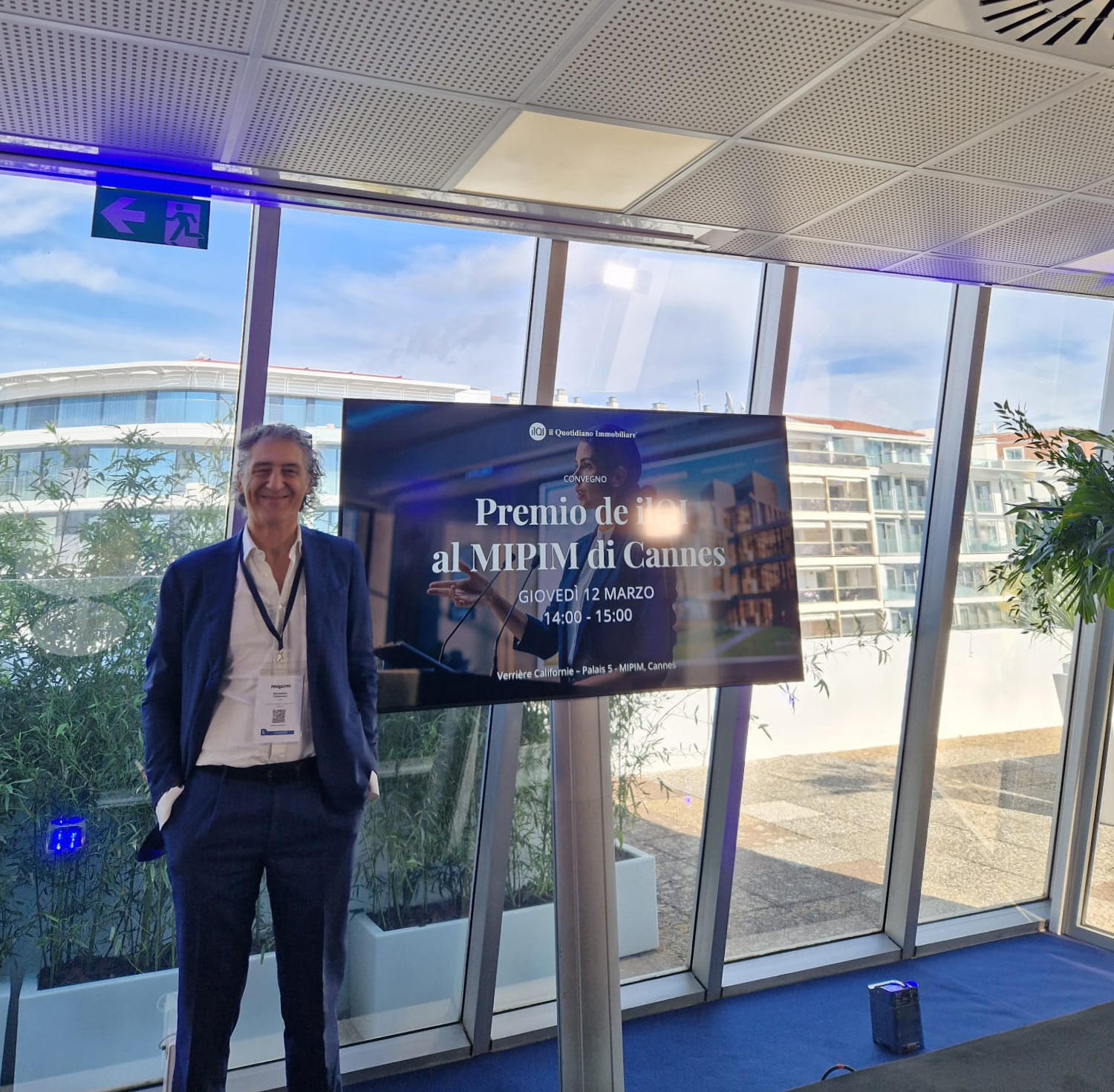
During MIPIM in Cannes, Benedetto Camerana was interviewed by Il Quotidiano Immobiliare, alongside Massimo Roj of Progetto CMR – Gruppo Progetto International, on the role of Italian architecture in international markets and its ability to generate development through urban regeneration projects, with a particular focus on sports. The two were brought together to offer complementary perspectives: on the one hand, that of an architect, on the other, that of an entrepreneur, comparing design vision and development strategy.
At a time when the question of whether Italian design culture is expanding on the international stage is becoming increasingly relevant, Camerana notes that initiatives such as the “Progetti d’Italia nel Mondo” award clearly capture a real trend: the growing interest of international investors in Italian architecture. While this is not an entirely new phenomenon, it is certainly gaining momentum, supported by a number of actors, among whom Benedetto Camerana mentioned the representatives of Italian culture abroad — those “ambassadors” who have understood the value of architecture as the flagship of a broader system and as a strategic lever capable of activating entire supply chains.
Further confirmation of this dynamic came through participation in MIPIM, which also represented a significant opportunity for direct engagement with international investors. Within the programme jointly promoted by ICE and CEIP, Benedetto Camerana Studio was included in a structured platform for the promotion of Italian design, presenting the Innovation Mile and Spina 1 projects as emblematic case studies of urban transformation, alongside an initial informal preview of a major tourism development project on the coast south of Siracusa.
The topic of so-called “secondary” cities, those with fewer than a million inhabitants, such as Turin and Genoa, then arose. Here, the challenge is crucial: attracting investment that is usually channeled toward the established hubs of Milan and Rome. It has been said that cities like Turin, Bologna, and Padua have already embarked on smart growth paths, although significant opportunities also exist in smaller cities and in the South. It’s no coincidence that the firm has been working in Sicily for years, for example, where projects like the Messina Waterfront Masterplan, a major urban regeneration project, highlight extraordinary potential, not only related to tourism, but still hampered by slow decision-making processes. Last year, the project was selected for the Italian Pavilion at the Architecture Biennale. We reported on it here.
The discussion then turned to sport, one of the most interesting drivers and a key theme in contemporary urban development, which Benedetto Camerana has always embraced and addressed with projects of varying scope and scale: from the Olympic Village and L’Arco for the 2006 Turin Olympics, to the ATP Finals, to the mega sports centers developed for the Spanish brand GoFit, sport can be a cultural and urban infrastructure. Finally, the meeting turned its attention to Genoa: for Camerana, it is among the cities with the greatest future potential, especially in the residential sector, when and if the high-speed rail line is completed. Climate, air quality, location: favorable conditions just waiting to be activated. The opportunities are there—widespread, concrete, often already visible.