
CROSSING THE METAVERSE, BENEDETTO CAMERANA AT THE TECHNOLOGY BIENNALE
English writer Jeanette Winterson has defined AI as Alternative Intelligence: it’s a bit like the optimistic movement embodied by the Biennale Tecnologia, which this year questions which solutions should be explored to design and use technology to build new possible worlds. Addressing the major transitions of our time without prejudice and seeking concrete answers. The panel, “The Metaverse: Mobility or Immobility?“, is dedicated to new ways of understanding movement in digital environments: simulated training, co-design, virtual museums and cities, as well as critical issues related to energy, data, and governance.
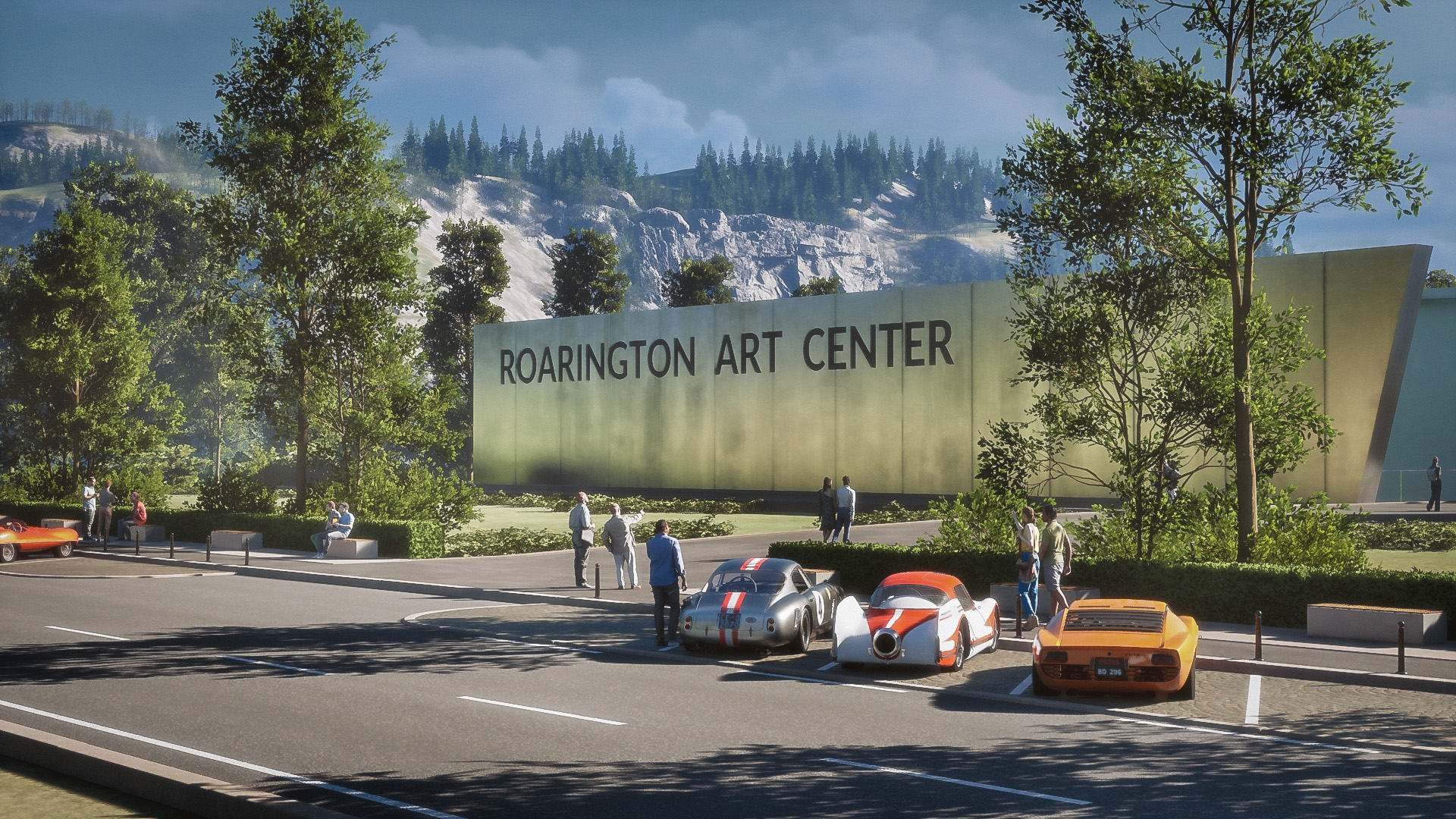
To understand when immersive experiences enable true mobility, creating public value and sustainability. Benedetto Camerana was invited to discuss with Wouter Haspeslagh, known for his work in mobility design and research and Chief Mobility Designer at Granstudio, and Guido D’Arezzo, Business Developer for the Italian market at DeuSens Hyperexperience, a studio specializing in immersive experiences, XR, and AI. The meeting was moderated by Luca De Biase, a columnist for Il Sole 24 Ore, author and speaker on Rai Radio 3, professor at the Universities of Pisa and Luiss, and gateway designer at the National Biodiversity Future Center.Within the overarching theme of the metaverse, Camerana presented two concrete cases developed with the Roarington project, which, along with TCCT – The Classic Car Trust, works to preserve and make classic car heritage accessible in the present. First, he discussed the immersive driving simulators at the MAUTO – Museo Nazionale dell’Automobile, which simulate driving classic cars owned by the museum on digitized historic tracks and circuits. Then, he discussed the museum in the metaverse: after designing the master plan for Roarington Meta, the city within the metaverse dedicated to classic cars, Benedetto Camerana also developed and designed the Roarington Art Center, for which he was interviewed by Art Basel and which will be officially presented at Art Basel 2026. This architecture applies the rigor of real design to an environment without physical constraints: a digital twin of a non-existent building, capable of hosting digital works and virtual replicas of real works.
More to come in June.
From here, the discussion expanded to the next twenty years: the robotic revolution and artificial intelligence that will lead to the near-total disappearance of human labor, balanced by the availability of a common income and longevity through DNA repair. This includes the possibility of extending the immersiveness of artificial experience to involve all the senses, through direct connections with the neural system. Camerana had addressed this last topic a few years ago with some leaders of Singularity University: the design of a system directly connected to the biotech bridge, to directly induce visual, olfactory, auditory, and tactile sensations in the neural system through digital systems. It’s what Camerana has called the “couch metaverse“: the ability to access every sensory aspect of life (from travel to sports to physical experiences) without leaving home. An unappealing but realistic science fiction scenario, which Camerana discussed some time ago at the Polytechnic University in a conference on the metaverse as a consequence of the exponential growth of digital technology and artificial intelligence, connected to the theme of singularity — the term designating the moment when artificial intelligence will surpass human intelligence.